Showing posts with label Miyagi. Show all posts

#Radioactive Yogurt in Miyagi Prefecture, 6.5 Bq/kg Radioactive Cesium

Diposkan oleh Pengetahuan dan Pengalaman on Sunday, September 11, 2011

This has to be the first time ever that radioactive cesium has been detected from yogurt by the official (government) testing, though I could be wrong.

Savechild.net has the information posted on the Ministry of Health, Labor and Welfare website. The ministry has been conducting the sampling tests on food items currently sold in the marketplace, while the Ministry of Agriculture, Forestry and Fisheries do the sampling tests on produce before they are sold in the market.

According to the table below from the Ministry of Health, the yogurt was sold in Niigata Prefecture, and tested by the lab in Niigata Prefecture. The yogurt contained 3.4 becquerels/kg of cesium-134, and 3.1 becquerels/kg of cesium-137. It was made in Kami-machi in Miyagi Prefecture, about 135 km from Fukushima I Nuke Plant. But the distance doesn't mean much, as the raw milk used to make yogurt could have come from anywhere and everywhere. (They do mix and match.)

More about#Radioactive Yogurt in Miyagi Prefecture, 6.5 Bq/kg Radioactive Cesium

#Radioactive Rice Hay From Miyagi Went Far and Wide

Diposkan oleh Pengetahuan dan Pengalaman on Thursday, August 25, 2011

The government officials are slowly finding out the extent of radiation contamination all over Japan, and here are only two minor examples that I picked up today.


First, from Mainichi Shinbun Hokkaido local version (7/23/2011; sorry old news that I just found), I learned of the potentially radioactive beef from Hokkaido, which has largely escaped the radioactive plume blowing from Fukushima I Nuke Plant. The cows in Hamanaka-cho ate the rice hay from Wakuya-cho in Miyagi Prefecture that was contaminated with 1886 becquerels/kg of radioactive cesium, the level of which exceeded the national provisional safety limit for cattle feed (400 becquerels/kg). Hamanaka-cho is located on the eastern tip of Hokkaido, facing the Pacific Ocean.


Hokkaido officials are perplexed. "We never thought possible that anyone would buy rice hay from Honshu, because it's too costly." It was beyond their expectation.


The second one is the radioactive manure in Yamagata Prefecture. According to Sankei News (8/25/2011), the Yamagata prefectural government announced on August 25 that the cow manure at 7 cattle farms in the prefecture tested between 500 to 2600 becquerels/kg of radioactive cesium. All 7 farms were feeding their meat cows with rice hay from Miyagi Prefecture.


What I don't understand is why these farms even bought rice hay from Miyagi Prefecture, when their own prefectures are big producers of rice and there should be rice hay in abundance.


Well, since the leaf compost made out of radioactive dead leaves in Tochigi Prefecture can be mixed with dead leaves imported from Thailand and Bangladesh and sold all over Japan by one company, anything is possible.

More about#Radioactive Rice Hay From Miyagi Went Far and Wide

New Word to Learn for Non-Japanese Speakers: "Dango"

Diposkan oleh Pengetahuan dan Pengalaman on Tuesday, August 23, 2011

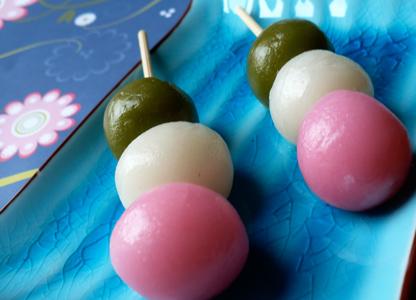
"Dan-goh", with the second syllable pronounced long. If you pronounce it short, it will mean "sweet rice-flour dumplings", which look like these in the photo.


So what is "dango"? It is a long-standing business practice in Japan across many, many industries but particularly heavily used in the construction industry whereby the competitors get together and arrange who will win the bid and at what price. It's a fine example of "give and take", or "I scratch your back and you'll scratch my back later". A contractor who is not to get the job this time is scheduled to get the next one, or a contractor who is to get the job promises to subcontract or form a joint venture with a competitor. No one will underbid. Industrial harmony. The winner is pre-selected, and to make up the appearance (and to make the selection committee look like it is doing the job) the bidders often craft their bids that are intentionally inferior to the bid by the pre-selected winner.


In exchange for the orderly market, it usually ends up costing the taxpayers a bit more and enriching those local government officials with strong ties to these colluding companies.


Now, Miyagi Prefecture, whose governor's idea of "recovery" is to build a memorial museum and memorial park for the March 11 disaster, has started to solicit bidding on the disaster debris cleanup jobs. With huge amount of money to be spent freely (remember, now it's the national government paying for the cleanup) to the tune of 240 billion yen (US$3.13 billion) - the largest project size for Miyagi Prefecture - the nation's construction industry got in shape quickly to do the "dango" to divvy up the money and help clean up the disaster debris, which is likely to be pretty radioactive.


Radiation? What radiation? We have the "dango" to do.


From Asahi Shinbun (5:01AM JST 8/24/2011):

 宮城県は23日、東日本大震災で発生した石巻地区のがれき処理を大手ゼネコン・鹿島を代表とする計9社の共同企業体(JV)に委託すると発表した。事業費は同県発注事業で最大規模の約2400億円。学識者らでつくる審査委員会が、公募に応じた2JVの中から発注先を決めた。


Miyagi Prefecture announced on August 23 that the cleanup of disaster debris in the Ishinomaki district will be awarded to the joint venture of 9 companies headed by Kajima, one of the largest general contractors in Japan. The project cost will be about 240 billion yen [US$3.13 billion], the largest ever for the prefecture. The selection committee made of experts chose between the two joint ventures who submitted the proposals.


 県には、企業体が審査会に選定にあたっての提案をする前に、このJVが受注することで調整を済ませているとの談合情報が寄せられていたという。


The prefecture was reportedly informed of a "dango" taking place, where the Kajima JV's winning the contract had been predetermined by the participants even before the proposals were submitted to the selection committee.


 同県内では震災で発生したがれきが約1500万トンにのぼり、同県の一般ごみ23年分にあたる膨大な量となっている。


Miyagi Prefecture has 15 million tonnes of disaster debris, which is equal to 23 years worth of regular garbage in the prefecture.

More and much more to come. The debris cleanup, which was going nowhere at all after 5 months since the March 11 triple disaster, will be done very quickly now that the big contractors are assured of the big money. Already, also in Miyagi Prefecture, a big paper company has signed a contract with the prefectural government to burn the disaster debris for the company's thermal power generation to power the company's plant in Ishinomaki City. The excess electricity will sold to Tohoku Electric, according to Kahoku Shinpo (in Japanese; 8/23/2011).


They're going to burn the radioactive debris to generate electricity, and they will get paid for taking the debris as fuel.


And these general contractors in joint ventures will burn, bury, and burn more, with the help of junior JV partners which often include small construction firms owned and operated by the senior officials in the local municipalities, including mayors.

The other JV who supposedly lost out on this bid will surely get their job for the next round of disaster debris cleanup, because that's the whole point of "dango" - secure job for everyone, over time.


Professor Kodama of Tokyo University warned against this very "dango" in his testimony in the Diet. Ah but Japan is finally on the way to recovery. "Dango" collusion is back! Radioactive or not.

More aboutNew Word to Learn for Non-Japanese Speakers: "Dango"

Wild Boar in Miyagi Prefecture Was Found With 2,200 Becquerels/Kg of Radioactive Cesium

Diposkan oleh Pengetahuan dan Pengalaman on Saturday, August 20, 2011

It adds to the beef conundrum from yesterday's post that the cow that wasn't fed contaminated rice hay. This wild boar was most likely eating the farm crops, wild plant roots and fruits, and occasional maggots and insects.


From Yomiuri Shinbun (8/19/2011):

宮城県は19日、県猟友会の会員が捕獲したイノシシの肉から、暫定規制値(1キロ・グラムあたり500ベクレル)を超す1キロ・グラムあたり2200ベクレルの放射性セシウムが検出されたと発表した。


Miyagi Prefecture announced on August 19 that 2,200 becquerels/kg of radioactive cesium was found in the meat of a wild boar caught by a member of the hunters' association in the prefecture. The provisional safety limit [for cesium in food] is 500 becquerels/kg.


 イノシシ肉は市場に流通していないが、県は野生動物の食用摂取を控えるように呼びかけている。発表によると、イノシシは7日に同県南部の角田市で捕獲され、同会が16日に検査機関に検査を依頼した。イノシシは通常、土中の虫や畑の作物を餌にしている。


Wild boar meat is not sold in the market, but the Miyagi prefectural government is asking people to refrain from consuming the game meat. According to the announcement by the prefectural government, the wild boar in question was caught in Kakuda City in southern Miyagi on August 7, and the hunters' association asked a testing laboratory to do the analysis [for radioactive materials] on August 16. Wild boars normally eat worms in the soil and the field crops.

But don't worry about minor details like wild boars being radioactive (never mind that they don't eat rice hay). Miyagi has a big plan for the future, once the governor's "recovery and reconstruction" plan is approved in the prefectural assembly. One of the central ideas of Governor Murai is to build a big museum to commemorate the earthquake/tsunami of March 11, and build a memorial park around the museum. His other ideas include high-rise towers and high-rise residential buildings to separate out the living space and work space (farmers and fishermen would "commute" to their work which would be organized like corporation).


It's a great recovery plan for the area's general contractors who usually have to team up with the national general contractors to share the project. Great for big agribusiness too, if they don't mind radiation in the soil, as this wild boar clearly demonstrates exists in abundance.

More aboutWild Boar in Miyagi Prefecture Was Found With 2,200 Becquerels/Kg of Radioactive Cesium

Japanese Government Will Lift Shipping Ban on Cows from Fukushima and Miyagi (Hello #Radioactive Beef Again)

Diposkan oleh Pengetahuan dan Pengalaman on Thursday, August 18, 2011

Nothing coming out of Japan makes sense any more, so this news is simply adding to that growing list.


The national government will lift the ban on sales and shipment of meat cows raised in Fukushima and Miyagi Prefectures because the government is satisfied that the radioactive rice hay is now separated from other feed - either under the tarp or buried - so that it will not be fed to the cows.


If I remember right, the worry was not the rice hay but the meat itself, which tested high in radioactive cesium all over Japan as the cows from these two prefectures (and several more in Tohoku) had been sold far and wide because of the suddenly "affordable" price. They were particularly favored by certain cost-conscious municipalities (most notably Yokohama City) that fed the suspected meat to the kindergarteners and school children in school lunches, ignoring protests from the parents.


Humans eat beef not rice hay, as far as I know. But now the ban will be lifted because of ... rice hay storage procedure?


From Mainichi Shinbun (8/18/2011):

政府は18日、福島県と宮城県で飼育されている肉牛の出荷停止を両県全域で解除する方向で検討に入った。早ければ19日にも両県知事に解除を指示す る。肉牛から国の暫定規制値(1キロあたり500ベクレル)を超える放射性セシウムが検出され、政府は7月19日~8月2日、福島、宮城、岩手、栃木の4 県に出荷停止を指示したが、解除すれば初めてとなる。


The Japanese government started to prepare for the total lifting of the shipping ban on meat cows raised in Fukushima and Miyagi Prefectures on August 18. The government will instruct the governors of the two prefectures as early as August 19. As radioactive cesium exceeding the provisional national safety limit (500 becquerels/kg) was found in the meat, the government banned the shipping of the cows in Fukushima, Miyagi, Iwate, and Tochigi Prefectures between July 19 and August 2. Fukushima and Miyagi would be the first to have the ban lifted.

 農林水産省と厚生労働省、福島、宮城両県は、汚染された稲わらの管理や解体後の牛の放射性物質検査の体制などを協議してきた。その結果、汚染稲わ らを他の飼料と明確に区分してシートで覆ったり、地中に埋めて餌として使用できない状態であることが確認され、食肉処理後のセシウム検査で暫定規制値以下 であれば、出荷を認める方向。

The Ministry of Agriculture, Forestry and Fisheries, the Ministry of Health, Labor and Welfare, Fukushima Prefecture and Miyagi Prefecture have been discussing the ways to store the contaminated rice hay and to test radioactive materials after the cows are processed into meat. As the result, [the government is satisfied that] the contaminated rice hay has been confirmed to have been clearly separated from other feed and covered with plastic sheets or to have been buried in the ground so that it cannot be used as feed. As long as the meat tests below the provisional safety limit, the government will allow the shipping.

 政府は岩手、栃木両県についても同様の条件が整い次第、出荷停止を解除する方針。

As soon as the same condition is achieved in Iwate andn Tochigi Prefectures, the government will lift the shipping ban there.

 出荷再開の条件として、厚労省は畜産農家に保管されている汚染稲わらを農家の敷地外に移すよう求めていた。一方、農水省や福島、宮城両県は、保管場所の確保が難しいことを理由に農家の敷地内で牛と隔離した場所に置く方法を主張していた。


The Ministry of Health and Labor wanted the contaminated rice hay out of the cattle farms as a condition to lift the ban. On the other hand, the Ministry of Agriculture and Fukushima/Miyagi Prefectures insisted the rice hay remain within the farms as long as it was separated from the cows, because it would be hard for the farms to secure the storage space outside the farms.
So the Ministry of Health and Labor lost. This is the Ministry that's supposed to protect consumers.


Will they test all the cows? No they won't. Not even in Fukushima. They only test the meat of the cows raised in the planned evacuation zone and evacuation-ready zone right outside the 20 kilometer radius from Fukushima I Nuke Plant. For everywhere else in Fukushima Prefecture, the first cow to be shipped from a cattle farm will be tested. If that passes the test, all cows can be sold.


Even when they do test, they will just do the simple test using "affordable" instruments that cost only a few thousand dollars and take only 15 minutes to test, and as long as the number is below 250 becquerels/kg they won't test further. Only if it goes above 250 becquerels/kg, they will use expensive instruments that cost hundreds of thousands of dollars and take 1 hour to test.


What about the news at the end of July that radioactive cesium is NOT distributed evenly in the meat, not even within the same part?


Well, that's not in the manual of elite bureaucrats in these two ministries, and Fukushima and Miyagi would be the last ones to alert them.


So here we go again. Radioactive beef will be force-fed through social pressure, now that the government declares safety. No way to test all meat, and even if they do, one piece of meat may test differently from another piece of the same part. And they won't even tell you whether it is 244 becquerels/kg or 2 becquerels/kg, as long as it is below 250 becquerels/kg.


Fukushima Prefecture, probably in anticipation of the lifting of the ban, has launched a new campaign to push Fukushima produce - vegetables, fruits, meat - using celebrities. "Fukushima Shin Hatsubai (new product launch)" is the campaign.


The governors of these two prefectures will no doubt do the ceremony of "declaration of safety" of their own, and eat the beef in front of the press to appeal safety to the nation and the rest of the world. If they are so brave as the governor of Shizuoka, they will go to a gourmet Japanese restaurant in New York and host an event with some celebrities who (used to) love Japanese cuisine and eat the safe beef that tested below the provisional safety limit of Japan.


More aboutJapanese Government Will Lift Shipping Ban on Cows from Fukushima and Miyagi (Hello #Radioactive Beef Again)

Decrease in White Blood Cells, Headache, Nausea in a Hospital in Sendai City, Miyagi

Diposkan oleh Pengetahuan dan Pengalaman on Friday, August 12, 2011

Tweets from a nurse (my very good guess from her tweets) in a large hospital in Sendai City, Miyagi Prefecture on August 10:

原因不明の白血球低下、頭痛、嘔吐増えてます。既存の診断名つけられて治療しても効果なしのケースうちの病院でもみかけます。もちろん全部放射能の影響というつもりはありませんが、これも事実です。


Increasing number of patients with unexplainable decrease in white blood cells, headache, nausea. They are diagnosed for existing illness and undergo treatment, but they don't respond to the treatment at all. I've seen those cases in my hospital. I'm not saying they are all because of the radiation exposure, but I'm telling you what I'm seeing.


患者さん洗髪すると、髪が束になってごっそり抜けます。それを見るたびほんとに怖いです。「なーんで白血球下がってるんだろうなーーー」なんてのんきにいってる場合ですか先生。治療できない人がこれから増えていきますよ。


When we wash their hair, it comes off in a clump. It is really scary. The doctor says, "I really wonder why the white blood cell count is down..." Doctor, don't be so relaxed about it. There is going to be more and more people who don't respond to treatment.

She suspects internal radiation from hospital meals, which the in-patients have no choice but eat.


The Japanese government can now create another "Special District for Medical Research" in Miyagi Prefecture, in addition to the one in Fukushima.

More aboutDecrease in White Blood Cells, Headache, Nausea in a Hospital in Sendai City, Miyagi

Japan's Prefecture Assembly Chairpersons Want Prime Minister Kan to Resign

Diposkan oleh Pengetahuan dan Pengalaman on Wednesday, July 27, 2011

The National Association of Chairpersons of Prefectural Assemblies held its regular meeting on July 27 and passed the resolution demanding Prime Minister Naoto Kan to resign so that the trust in the government is restored.

Uh huh.

From Jiji Tsushin (7/27/2011):

全国都道府県議会議長会(会長・山本教和三重県議会議長)は27日の定例総会で、東日本大震災で被災した岩手、宮城、福島3県の議長が共同提案した「菅直人首相の退陣を求める緊急決議」を賛成多数で採択した。

The National Association of Chairpersons of Prefectural Assemblies held its regular meeting on July 27 and passed the resolution by majority demanding Prime Minister Naoto Kan to resign. The resolution was jointly proposed by the chairpersons of the prefectural assemblies in Iwate, Miyagi, and Fukushima which have been hit hard by the March 11 earthquake/tsunami disaster.

 決議では、震災や福島第1原発事故をめぐる首相の言動を「場当たり的な対応、一連の発言や行動は国民の政治に対する信頼を著しく損ねた」などと批判し、早期退陣を求めている。

The resolution criticizes the prime minister over his remarks on the earthquake/tsunami disaster and the Fukushima I Nuclear Power Plant accident for his "haphazard response, series of remarks and actions which have greatly impaired the trust of Japanese people in their government" and calls for his early resignation.

Prime Minister Kan shows no sign of resigning any time soon, once he duped the super-naive ex-prime minister Hatoyama and used him to destroy the momentum for the vote of no confidence (which was really set to pass with bi-partisan support). On the contrary, Mr. Kan says he's been so inspired by the win by the Japanese women's soccer team in the World Cup, and that he learned from the team "never to give up".

What's interesting about this mostly ceremonial resolution is that it was jointly proposed by the three prefectures where the national government's money (i.e. Japanese taxpayers' money) will rain in the government's effort to "recover and reconstruct" after the earthquake/tsunami/nuke accident. Fukushima is to become the radiation research capital of the world. Miyagi and Iwate are to become the "food factory" for the rest of Japan, with farming and fishing organized into some corporate structure, with people living in "ecotowns" created by shaving off the top of the mountains so that they are safe from tsunami. A grand vision, and the governors there, particularly the Miyagi governor, are thinking in the similar vein.

But their assembly chairpersons want PM Kan to go. That does not add up, does it? It looks more like another pressure tactic to get more of what they want, which is more money from the national government and sooner.

And if they really think PM Kan and the national government are alone in causing the trust in the government to erode fast in Japan, I don't know what to say.

More aboutJapan's Prefecture Assembly Chairpersons Want Prime Minister Kan to Resign

#Radioactive Hay Spreads to Niigata Prefecture

Diposkan oleh Pengetahuan dan Pengalaman on Monday, July 18, 2011

Two cattle farmers in Nagaoka City in Niigata Prefecture bought rice hay for their cows from a seller in Miyagi Prefecture and fed their cows. 24 cows were later sold in Niigata and Tokyo. Now the rice hay has been found to contain 10,500 to 20,600 becquerels/kg of radioactive cesium.

Niigata Prefecture is on the Japan Sea side, and is most noted for its excellent premium rice brand, "Koshihikari".

Many Japanese thought Niigata was relatively safe from radioactive fallout from Fukushima I Nuclear Power Plant. Unfortunately there are more than one way to get the fallout, and buying rice hay from Miyagi (not even Fukushima) was one of them.

(Radioactive cesium of Fukushima-origin was indeed detected from the raw milk in Niigata.)

By the way, it turns out that the rice hay that cattle farmers in Tohoku fed their cows with was not due to the shortage or unavailability of other types of feed. Rice hay is an integral part of the cows' diet, as it nicely blend fat with the red meat ("Shimofuri") when ingested. So the cattle farmers feed their meat cows with rice hay before the cows are sent to be processed.

If that's the case, it looks like the bureaucrats in the Ministry of Agriculture, Forestry and Fisheries didn't know how the cattle farming was done, but the farmers must have assumed that these government bureaucrats knew what they were doing and issued orders to the farmers accordingly.

Government regulations crafted by the desk-bound bureaucrats serve to dull the keen sense of the farmers on the fields. For that matter, of anybody. The answer isn't "more regulations" (just look at the current sets of regulations have done so far) but sadly that's what people will be calling for.

From Jiji Tsushin (7/18/2011):

新潟県は18日、同県長岡市の畜産農家2戸が保管していた宮城県産稲わらから、国の暫定規制値(1キロ当たり300ベクレル)を超える1万500~2万 600ベクレルの放射性セシウムを検出したと発表した。乾燥する前の水分を含んだ状態に換算すると、規制値の8~15倍に相当する。うち1戸の農家からは 新潟県内と東京都のと畜場に肉牛計24頭が出荷されたことも分かった。これらの農家はいずれも宮城県内の業者から稲わらを購入したという。

Niigata Prefecture announced on July 18 that 10,500 to 20,600 becquerels/kg of radioactive cesium was detected from the rice hay at two cattle farms in Nagaoka City in Niigata. The rice hay was harvested in Miyagi Prefecture. The provisional safety limit for cattle feed is 300 becquerels/kg for cesium. If the rice hay is reconstituted with water, the above numbers are 8 to 15 times the limit of the provisional safety limit. It has been revealed that one of the two farms shipped 24 meat cows in Niigata and Tokyo. Both farms purchased the rice hay from a dealer in Miyagi Prefecture.

 新潟県は2戸に対し、この稲わらを与えた牛の出荷や移動の自粛を要請するとともに、流通状況の調査を開始した。県内で宮城県産の稲わらを使用している他の農家が保管する稲わらを対象に、セシウム検査も実施する。 

Niigata Prefecture has requested the two cattle farms not to ship or move the cows that have been fed with the contaminated rice hay, and started to trace the movement of the cows already shipped. The prefectural government will also test for cesium in the rice hay at other cattle farms in the prefecture who use the rice hay from Miyagi Prefecture.

More about#Radioactive Hay Spreads to Niigata Prefecture

#Radioactive Rice Hay Found in Miyagi Prefecture

Diposkan oleh Pengetahuan dan Pengalaman on Sunday, July 17, 2011

in three locations in two cities that are150 kilometers north of Fukushima I Nuclear Power Plant.

In response to the radioactive rice hay found in Fukushima Prefecture that contained up to 500,000 becquerels/kg of cesium, Miyagi Prefecture did the survey of rice hay in three locations in two cities, Kurihara City and Tome City, north of Sendai City. Maximum 3,600 becquerels/kg of cesium was found in the rice hay, which had been used by the cattle farmers to feed their cows.

Sankei Shinbun (7/15/2011) reported the comment of the cattle farmers:

「大変憤慨している」-。宮城県登米市の肉用牛農家の男性(58)は声を荒らげた。「稲わらは秋に田んぼから収集したものだけを牛に食べさせているが、経 営への打撃は大きい」と話す。「まさかここまで(放射能が)飛んでくるとは夢にも思わなかった。...」

"I am very upset", says a cattle farmer in Tome City in Miyagi Prefecture. "I've been feeding the cows with the rice hay collected from the rice fields last fall. This is a big blow to my farm. I never imagined that the radioactive materials would fly this far. "

The Miyagi prefectural government's instruction to cattle farmers were: "Do not use the rice hay collected after the Fukushima I Nuclear Power Plant accident." So, following the instruction, the cattle farmers were feeding their cows with the rice hay collected last fall.

This is the radiation contour map created by Professor Yukio Hayakawa, the volcanologist at Gunma University. Notice the arm that goes north from the Fukushima I Nuke Plant and curl left. Kurihara and Tome are right below the curl. If only someone had shown the map to the cattle farmers there ...


Or if only someone had shown the cattle farmers the radioactive materials dispersion forecast by ZAMG, German Weather Bureau, or Norwegian Weather Bureau early in the accident, they would have seen that Miyagi Prefecture was almost constantly under the radioactive plume from the nuke plant.

More about#Radioactive Rice Hay Found in Miyagi Prefecture